en
en Slovenščina
 Italiano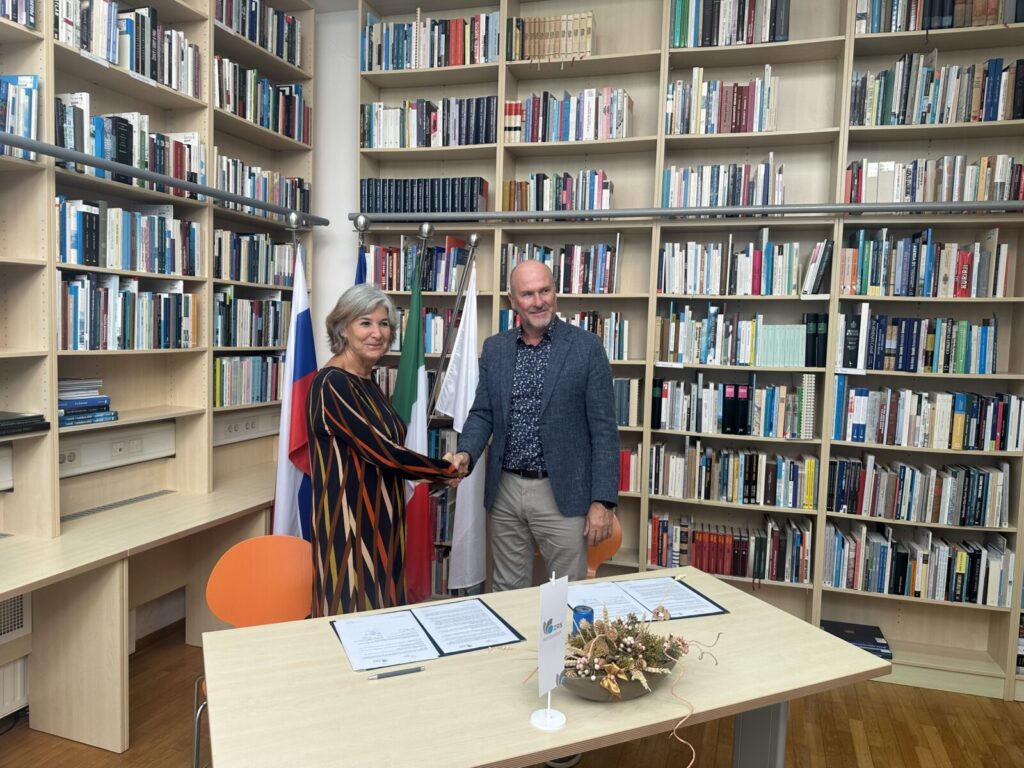
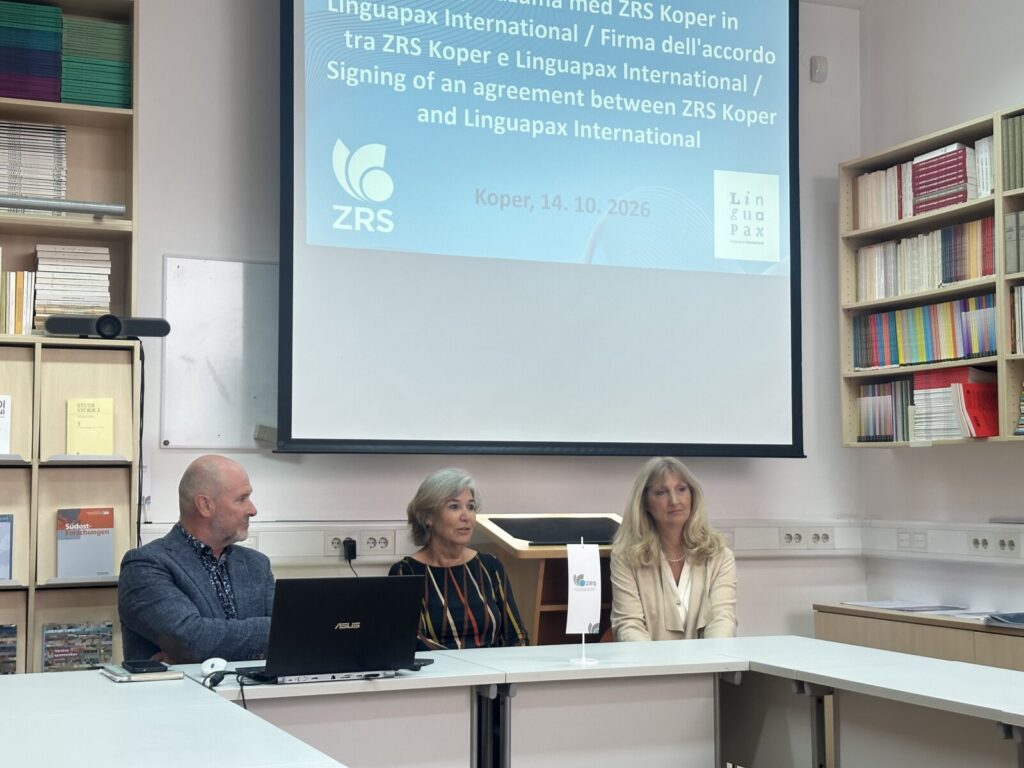
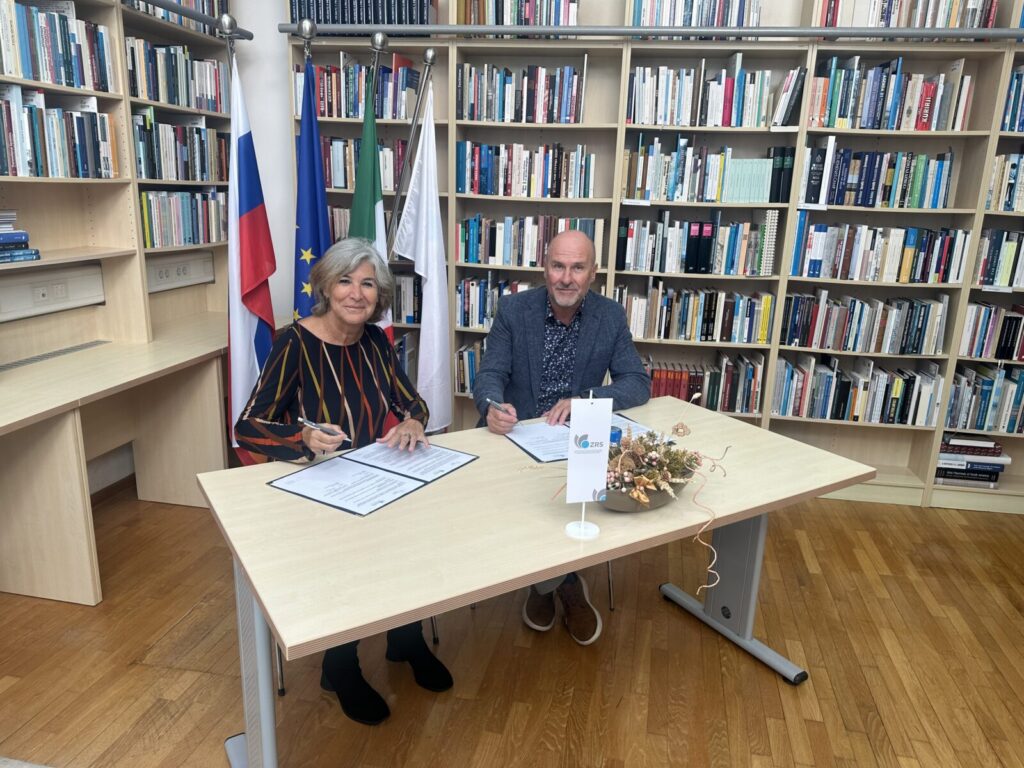
The Science and Research Centre (ZRS) Koper today signed a cooperation agreement with Linguapax International, officially becoming the organisation’s branch for the Euro-Mediterranean region. The agreement marks an important step towards strengthening international cooperation in preserving linguistic diversity, promoting multilingualism, intercultural dialogue and peace.
The official signing ceremony took place at the ZRS Koper Library as part of a two-day visit by Mònica Pereña, President of Linguapax International, to Koper and Trieste.
“The Mediterranean Hub of Wisdom is not merely our vision, but also the strategy guiding our work. The coexistence of the Slovenian and Italian languages is an integral part of our identity and of the region in which we live and work. This is precisely why we recognise the importance of multilingualism, intercultural dialogue and respect for different linguistic communities,” emphasised Prof. Dr. Rado Pišot, Director of ZRS Koper, at the signing ceremony.
The significance of the cooperation was also highlighted by Dr. Vesna Mikolič, Head of the Institute for Linguistic Studies at ZRS Koper:
“The strategic priorities of ZRS Koper and our Institute for Linguistic Studies are closely aligned with the mission of Linguapax International. We believe that promoting multilingualism and respecting all languages, including lesser-used and endangered ones, are essential for mutual understanding, coexistence and peace. Linguistic diversity is not an obstacle, but a source of richness that brings us together. Promoting multilingualism is also an important part of the peacebuilding process. By signing this agreement and establishing the Euro-Mediterranean branch, we will be able to further strengthen these efforts and contribute to fostering a culture of dialogue and respect for diversity.”
Mònica Pereña, President of Linguapax International, expressed her satisfaction at welcoming ZRS Koper into the organisation’s international network:
“We are delighted to welcome new members to our organisation. Our goal is not only to preserve languages, but also to build bridges between communities, as languages are essential tools for safeguarding cultures and identities. The Mediterranean plays a particularly important role in this regard, serving as a meeting point between the Global North and the Global South, especially in the context of international migration. Today, many cultures and nationalities coexist in major cities, while digital spaces are also creating new challenges and opportunities for bringing these communities together,” Pereña emphasised.
Linguapax International, established in 1987 following a UNESCO initiative, has been dedicated to protecting and promoting the world’s linguistic diversity as a foundation for intercultural dialogue and peace. The organisation places particular emphasis on the recognition of linguistic rights, the preservation of endangered and minority languages, the intergenerational transmission of linguistic heritage, and the role of language education in building more inclusive societies.
The establishment of the Euro-Mediterranean branch of Linguapax International at ZRS Koper opens up new opportunities for cooperation among research institutions, experts and other stakeholders working in the fields of linguistic diversity, multilingualism and intercultural coexistence. This development further strengthens ZRS Koper’s position within the international research community.
As part of the visit, Linguapax International will also sign a cooperation agreement with the University of Trieste, specifically its Department of Humanities (DISU), on Thursday, 15 October 2026. The signing will be followed by a thematic study meeting entitled Languages, Peace and Coexistence (Incontro di studio “Lingue, pace e convivenza”), bringing together representatives of ZRS Koper, Linguapax International, the University of Trieste and the Regional School Office of Friuli Venezia Giulia. Participants will discuss the role of languages in social conflicts, peacebuilding processes and efforts to promote peaceful coexistence.
The cooperation among the three institutions offers an opportunity to further develop joint research and educational activities and to strengthen international efforts to preserve linguistic diversity and promote a culture of peace.