en
 Slovenščina
 Italiano
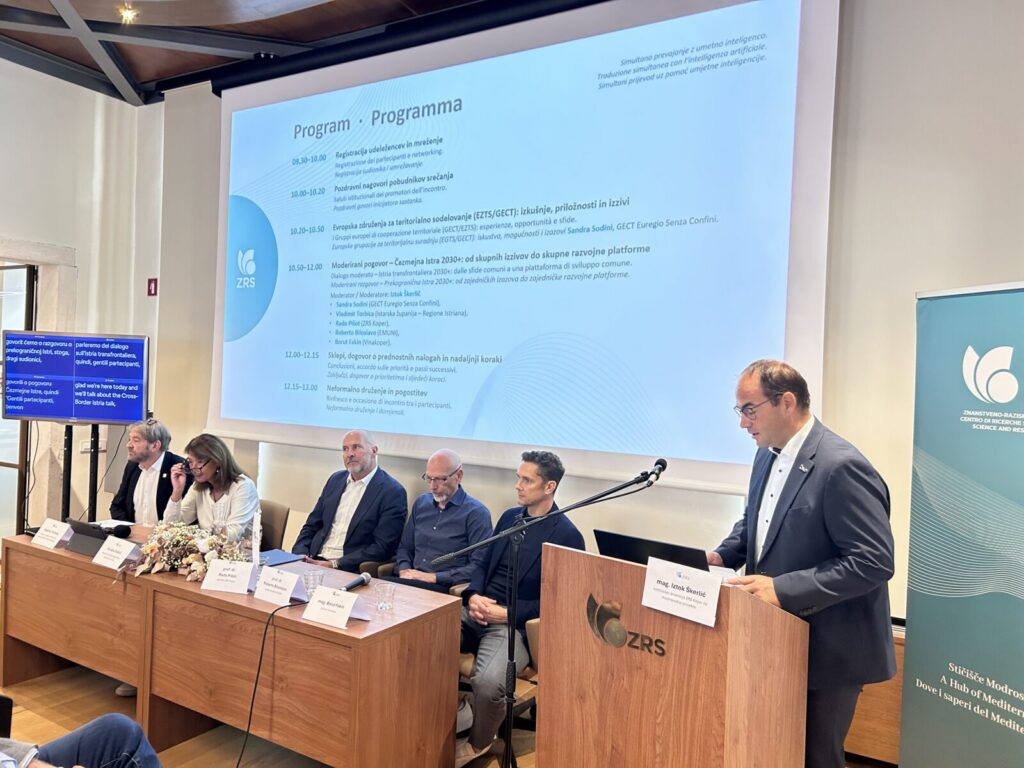
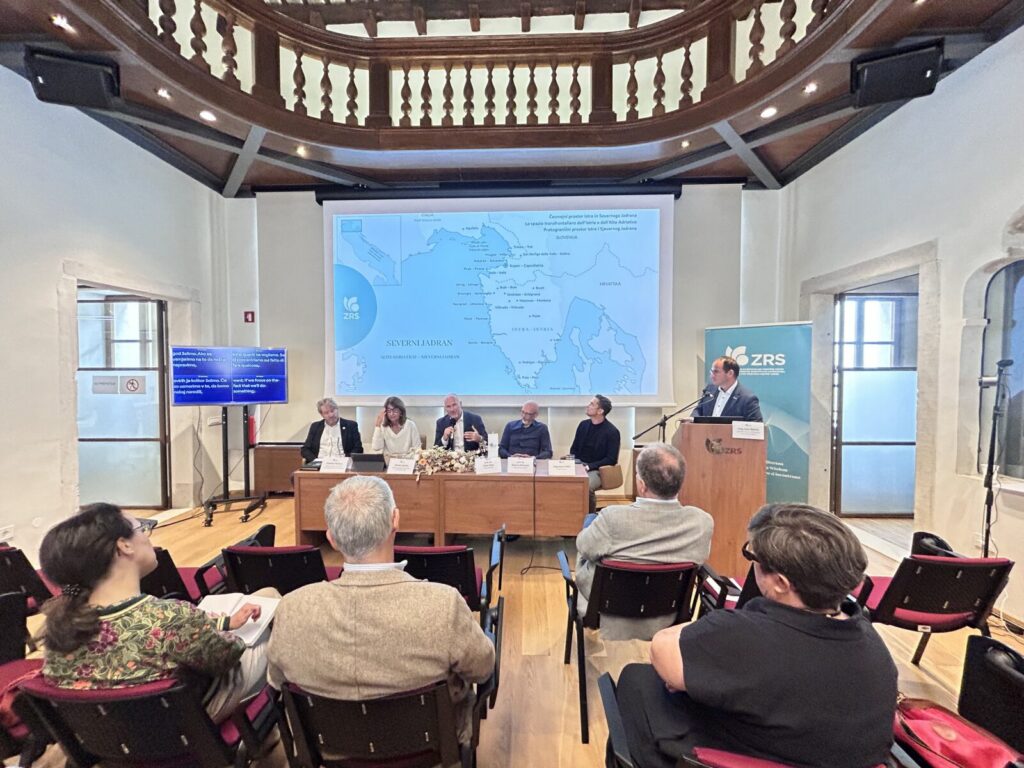
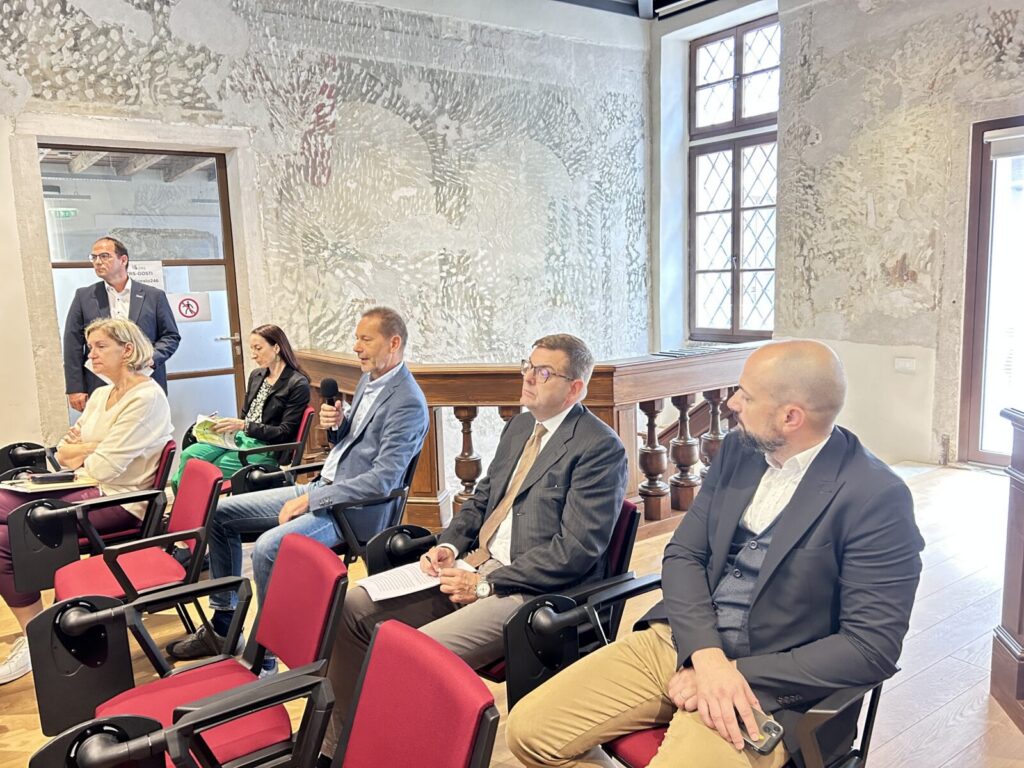
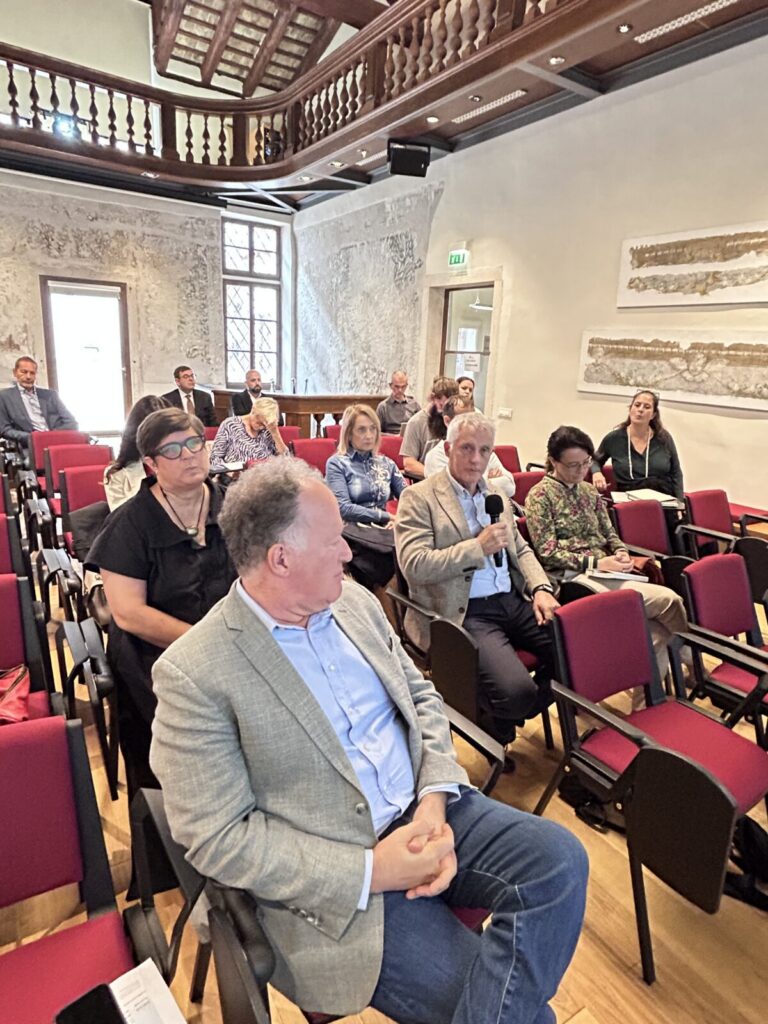
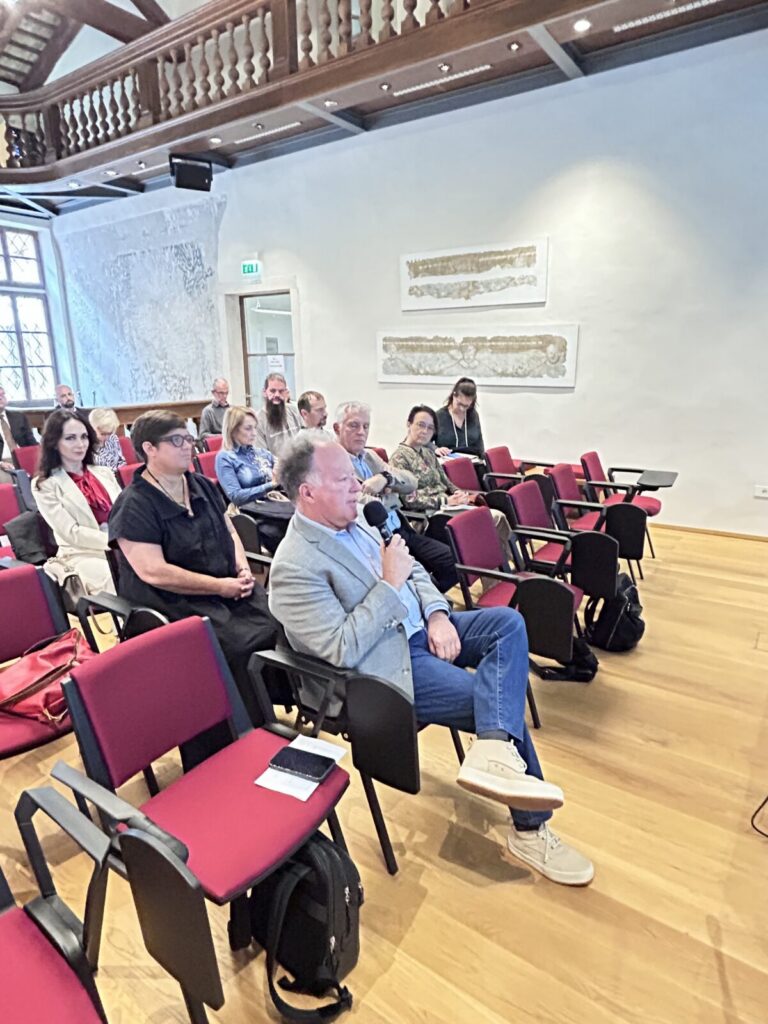
At the initiative of the Science and Research Centre Koper (ZRS Koper), a working meeting and discussion on a shared vision for the development of the cross-border Istrian region in the context of greater connectivity across the Northern Adriatic took place at the Centre for Humanities of ZRS Koper. Representatives of the research community, local and cross-border organisations, and the business sector discussed development opportunities for the Slovenian and Croatian parts of Istria, as well as the possibility of establishing a European Grouping of Territorial Cooperation (EGTC Istria), which would enable more sustainable and effective cooperation across the border.
Cross-border Istria is a historically, culturally, economically and geographically interconnected region facing numerous common development challenges. These include health and quality of life, water resource management, protection of the sea and coastal areas, sustainable mobility, adaptation to climate change, sustainable Mediterranean agriculture, cultural heritage, sustainable tourism, energy, and strengthening the research and innovation environment.
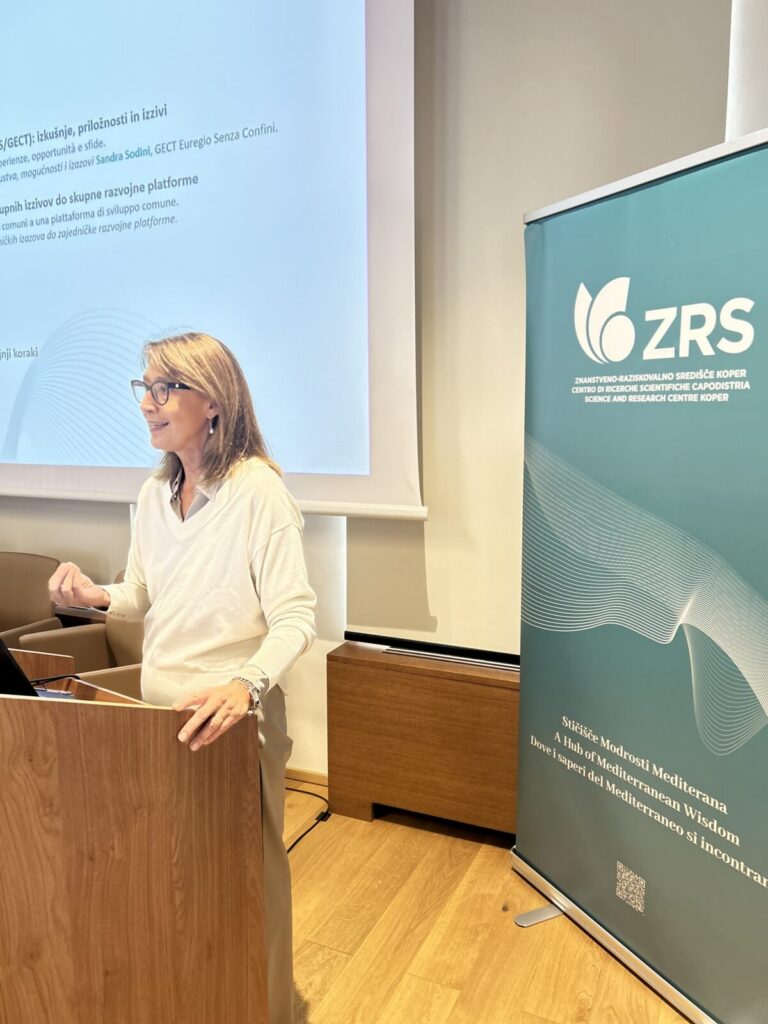
In the introductory part of the meeting, Sandra Sodini, Director of EGTC Euregio Senza Confini, presented experiences of operating European Groupings of Territorial Cooperation, their organisational and governance challenges, and the opportunities such structures offer to municipalities, regions and other development partners. She welcomed the EGTC Istria initiative with optimism, viewing such a grouping as a structure that connects people, knowledge, businesses and local communities while enabling long-term development programmes in agreed priority areas. She illustrated the advantages of European Groupings of Territorial Cooperation with concrete examples. A European Grouping of Territorial Cooperation enables partners from different sides of national borders to cooperate in planning and implementing joint development projects. Its added value lies primarily in providing a more permanent institutional framework that can extend beyond the limited duration of individual projects and facilitate more coordinated development activities.
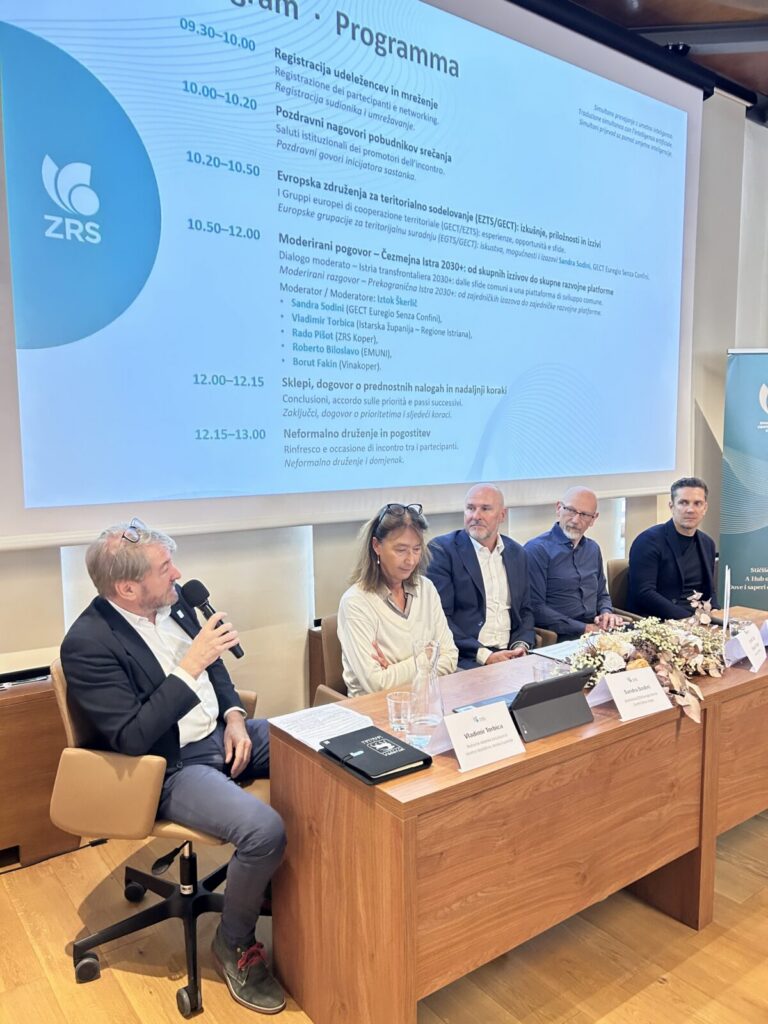
The central part of the meeting was a moderated discussion entitled Cross-Border Istria 2030+: From Shared Challenges to a Joint Development Platform, moderated by Iztok Škerlič, MSc. The discussion brought together Sandra Sodini, Director of EGTC Euregio Senza Confini; Vladimir Torbica, Head of the Department for Culture and Local Heritage of Istria County; Prof. Rado Pišot, PhD, Director of ZRS Koper; Borut Fakin, MSc, Director of Vinakoper and President of the Primorska Chamber of Commerce; and Prof. Roberto Biloslavo, PhD, Vice-President of the Euro-Mediterranean University (EMUNI) and Head of the Institute for Behavioural Economics at ZRS Koper. The participants highlighted various aspects of developing a shared cross-border region, ranging from institutional cooperation and cultural identity to knowledge transfer, business involvement and broader cooperation within the Mediterranean region.
Prof. Rado Pišot, PhD, Director of ZRS Koper, emphasised: “European Groupings of Territorial Cooperation work and deliver tangible results. This is clearly demonstrated by the examples of EGTC Euregio Senza Confini and EGTC GO in the Gorizia region. These territories have jointly secured programmes, funding and, perhaps most importantly, a common voice in Europe. It is our responsibility to move things forward and ensure that Istria gains the competitive advantage it deserves based on its history, knowledge and potential.”
He further added that living in Istria has a personal added value that we must learn to recognise and appreciate. According to him, the discussion demonstrated that we share a common history, knowledge and challenges, and that what is now needed is a joint step forward. All stakeholders should come together around the same table as soon as possible and contribute constructive proposals and concrete solutions. “We must not begin by asking what obstacles stand in our way, but rather why we need EGTC Istria and what we stand to gain from it. Once we have a clear answer to that question, we will also know how to overcome the challenges,” he added.
Vladimir Torbica, Head of the Department for Culture and Local Heritage of Istria County, stressed: “From the perspective of Istria County, today’s meeting has provided us with new information and ideas. In the near future, we intend to work towards joining EGTC Euregio Senza Confini, provided that the Istria County Assembly decides accordingly. We are also very interested in cooperating with all municipalities in Slovenian Istria, as we believe that an EGTC connecting the entire Istrian region would enable us to address common challenges more effectively.”
Particular attention was also devoted to Istria’s shared cultural heritage and identity as a foundation for long-term cooperation. The discussion raised questions about how to address health-related issues and healthcare services jointly, and how to build on the cultural and historical ties between people on both sides of the border to develop lasting development programmes. The meeting also encouraged reflection on broader international partnerships and on how cross-border Istria, with its knowledge and experience, could contribute to addressing common challenges in the Northern Adriatic and the Mediterranean.
The participants agreed that EGTC Istria would facilitate communication between partners on both sides of the border and open up new avenues for cooperation. Within a joint organisation, key stakeholders would be better positioned to find solutions to issues that cannot be resolved at the local level alone. Particular attention was drawn to the transport bottleneck in Slovenian Istria, which affects not only the Slovenian part but the wider Istrian region. The participants also addressed the measurability of results, the removal of administrative barriers, and opportunities for cooperation in developing and financing joint initiatives.