 en
en Slovenščina
 Italiano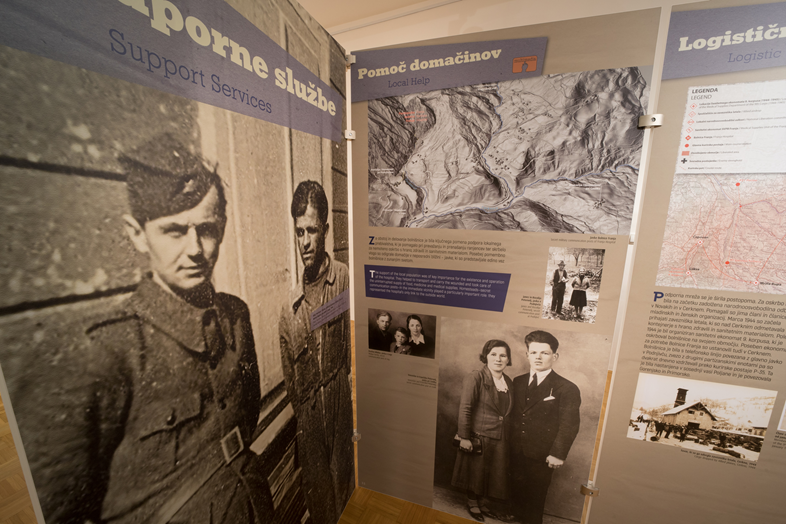
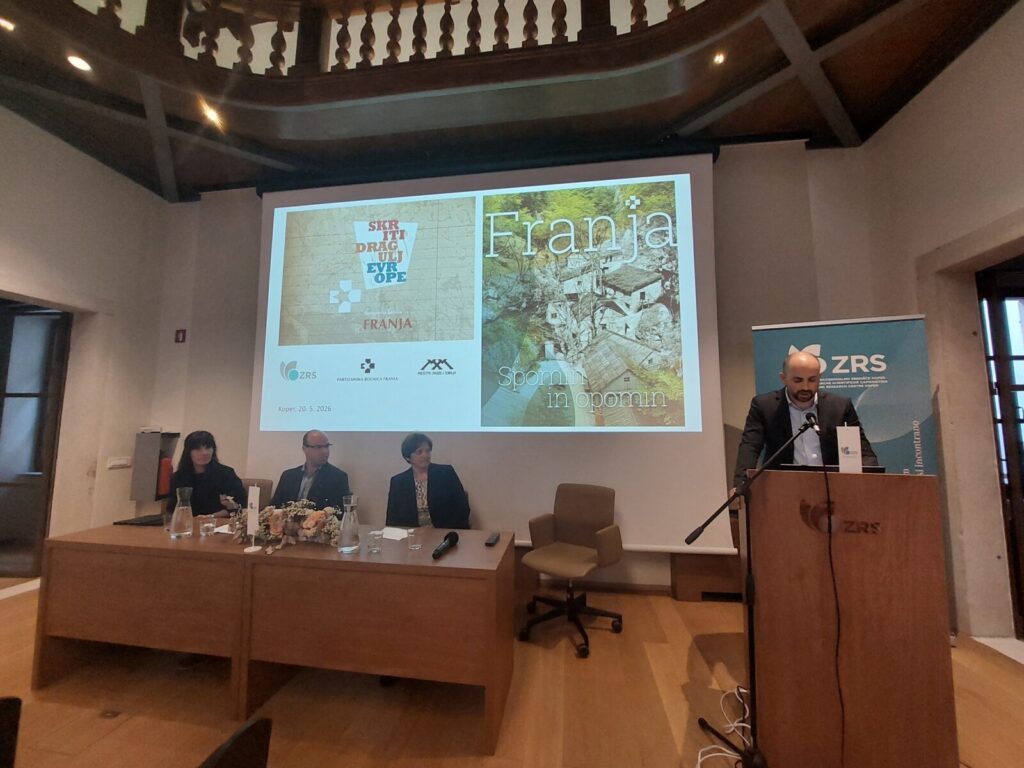
The Scientific-Research Centre Koper, in cooperation with the Idrija Municipal Museum and the Franja Partisan Hospital, opened the exhibition “Franja Partisan Hospital – The Hidden Jewel of Europe” on Wednesday, May 20, at the premises of the Centre for Humanities of ZRS Koper, and presented the collection Franja: Memory and Warning.
The exhibition will remain open until the 6th of July, from Monday to Friday between 8 a.m. and 4 p.m.
Through six thematic sections, the exhibition introduces visitors to the operation, organization, and everyday life of the partisan hospital. With the help of photographs, video recordings, personal objects, and testimonies from staff members, wounded patients, and local residents, it presents patient care, the supply of food, medicines, and medical materials, as well as the many security measures used to keep the hospital’s location secret. Special emphasis is placed on ingenuity and improvisation, both of which were essential for treatment and survival in extraordinary circumstances. The exhibition is designed interactively, allowing visitors to further explore the content through touch screens featuring audio and video recordings in several languages.
Deputy Director of ZRS Koper, Dr Tilen Glavina, emphasized: “We decided on this initiative together with the Idrija Municipal Museum. The palace housing the Centre for Humanities of ZRS Koper has a Venetian tradition, but we have already hosted exhibitions dealing with recent and contemporary history. We believe that the national liberation movement deserves a place in our spaces.”
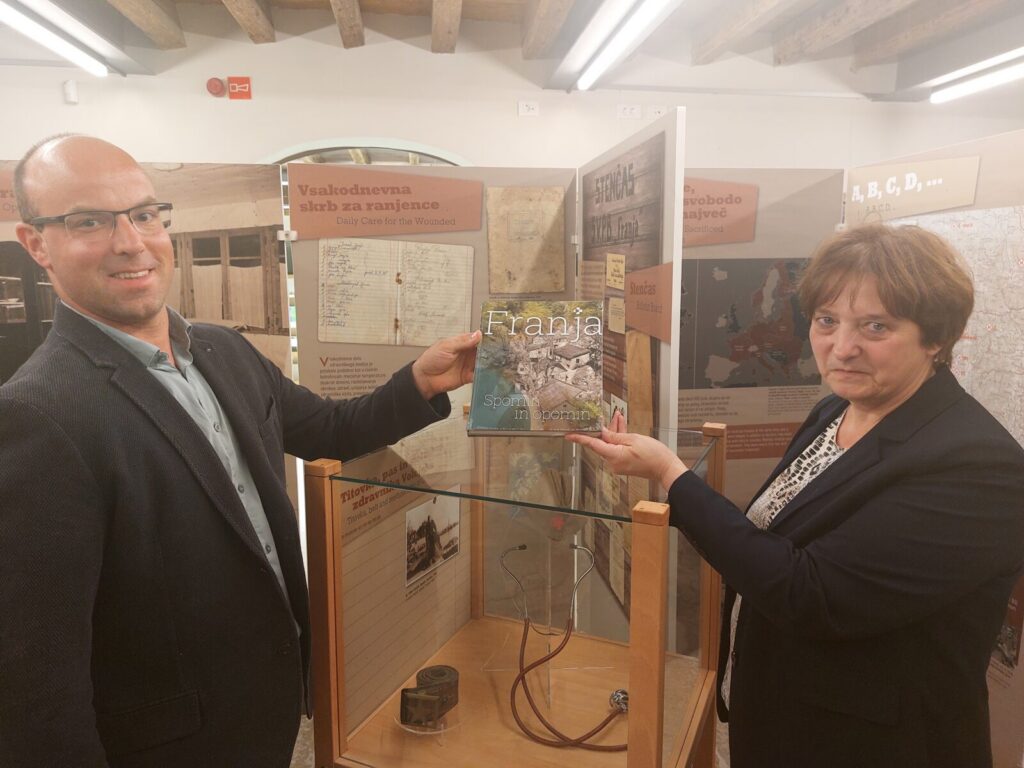
Speaking about the remarkable organization of the former partisan hospital, the exhibition’s author, Milojka Magajne, said: “The hospital functioned because the civilian population living nearby was willing to cooperate. We wanted to show how extensive this network really was. It was not just a handful of individuals, but everyone from those who contributed a liter of milk to those who transported the wounded or welcomed them into their homes and helped care for them.”
The restoration of the Franja Partisan Hospital, which was severely damaged during the floods in July 2023, is still ongoing. Protective nets are currently being installed above the gorge, after which the reconstruction of the damaged hospital buildings will follow. Director of the Idrija Municipal Museum, Dr Miha Kosmač, stated: “Work on the protective nets is expected to be completed in June, the access path project is in its final stage, while the preparation of documentation and the public tender for the restoration of the barracks are planned by the end of this year. Both the Idrija Museum and the Institute for the Protection of Cultural Heritage of the Republic of Slovenia have already prepared proposals for the entire restoration process.”
The Franja Partisan Hospital, hidden in the hard-to-reach Pasica Gorge in the Cerkno region, was one of the most important secret partisan hospitals in Slovenia during the Second World War. Between December 1943 and May 1945, 14 wooden barracks were built in the gorge, where around 600 wounded and ill people of different nationalities were treated. Besides Slovenians, patients included Italians, members of the peoples of the former Soviet Union, Croats, Serbs, Poles, French, and even Americans. The hospital was named after Franja Bojc, who led its operations and, together with the staff, cared for the wounded under extremely difficult wartime conditions. The Franja Partisan Hospital became a symbol of courage, humanity, comradeship, and the struggle against fascism and Nazism. Due to its great significance, the European Commission awarded it the European Heritage Label.
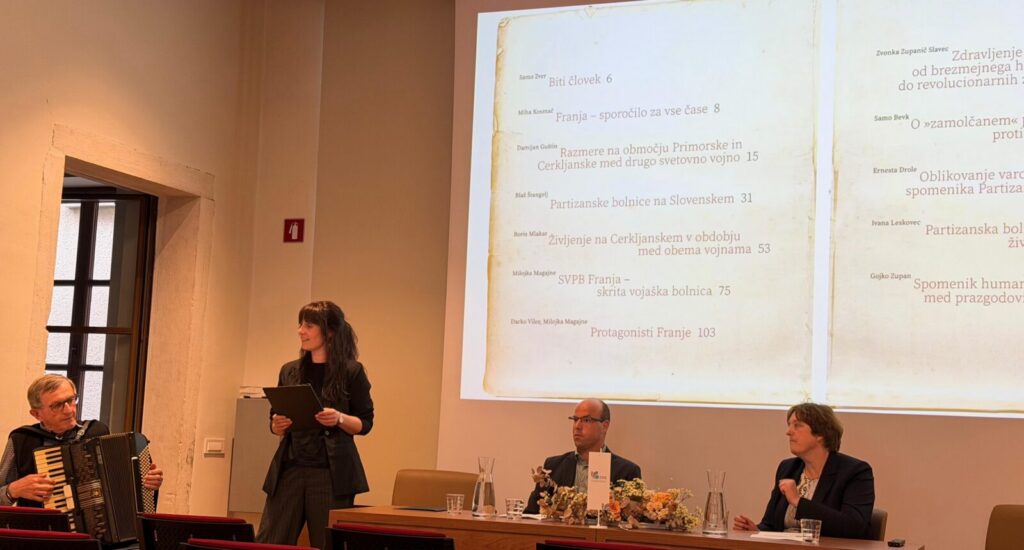
As part of the exhibition opening, the collection Franja: Memory and Warning was also presented, bringing together contributions from twelve authors on the origins, organization, and operation of the partisan hospital. The introductory texts were written by Dr Samo Zver and Dr Miha Kosmač.