 en
en Slovenščina
 Italiano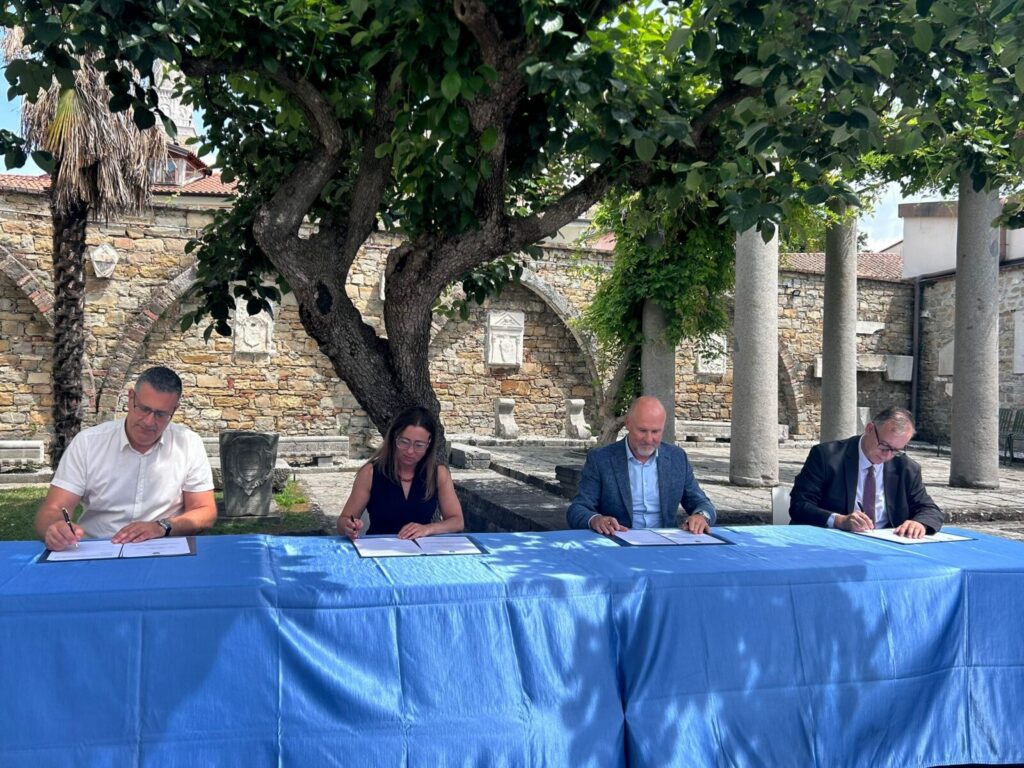
Representatives of the City Municipality of Koper, the University of Primorska, the Science and Research Centre Koper (ZRS Koper), the Port of Koper, the Primorska Chamber of Commerce and other key regional stakeholders endorsed development priorities aimed at building a more resilient community, strengthening demographic vitality and creating higher value-added jobs at today’s public forum on Koper’s development priorities through 2050. To achieve these objectives, four interconnected development pillars are envisaged: logistics, the blue economy, the silver economy, and sustainable agriculture and tourism.
At the public forum organised by the City Municipality of Koper, stakeholders noted that the Coastal–Karst Region, with Koper at its centre, ranks among Slovenia’s strongest economic areas, with above-average GDP per capita and the country’s lowest unemployment rate of 2.3%. At the same time, however, it faces a striking paradox: the highest risk of social exclusion among Slovenian regions, at 20.4%, above-average energy poverty, at 10.4%, and a rapidly ageing population, with 22.8% of residents aged over 65. The economy is currently highly dependent on a single key sector—transport and logistics—while its level of innovation intensity is among the lowest in the country.
The participants were welcomed by Aleš Bržan, Mayor of the City Municipality of Koper. He noted that 2050 might seem infinitely distant, but it is not: “The people who will lead, build and develop our municipality at that time are already living among us today. We must therefore take responsibility for their future today.” He added that the forum was not intended to impose an already finalised vision, but to encourage an open discussion about the kind of Koper people want and what must be done today to achieve such a future.
Both Mayor Bržan and Prof. Dr Rado Pišot, Director of ZRS Koper, expressed criticism regarding the level of cooperation among stakeholders to date, which they believe should be improved.
Mateja Hrvatin Kozlovič, Deputy Mayor of the City Municipality of Koper, emphasised that Koper already rests on the foundations of a strong economy, knowledge and international openness: “Today’s forum marks the beginning of closer cooperation. We therefore need shared development priorities that will bring together the municipality, the business community, the university, research institutions, the port and other key stakeholders in our region.”
The shared vision envisages the City Municipality of Koper becoming a diversified, innovative and resilient economic centre of the northern Adriatic by 2050.
The existing logistics pillar is to be complemented by three new interconnected development pillars:
- the blue economy, comprising higher value-added maritime services, a green and digital port, blue biotechnology and sustainable mariculture;
- the silver economy, encompassing services, assistive technologies and innovations that transform population ageing from a challenge into an opportunity;
- sustainable agriculture and tourism, focusing on the green economy, the preservation of the Mediterranean landscape and identity, and a transition from quantity to quality.
These pillars are linked by the vision of an economic hub—a shared innovation ecosystem that establishes lasting connections between the business community and the University of Primorska, ZRS Koper, EMUNI University and other research institutions. Its purpose is to attract and retain young people and international talent while strengthening economic resilience through a broader economic base that complements the existing logistics pillar.
The stakeholders committed themselves to further strengthening cooperation. Within this framework, they will examine the possibility of establishing a permanent collaborative platform and defining shared development indicators and milestones, including indicators related to quality of life. They will also consider concluding a cooperation agreement setting out specific measures, responsible parties, resources and a timeline. The conclusions of the public forum are understood as an open invitation to everyone capable of making a constructive contribution to the shared objectives.
The central purpose of these development priorities remains clear: economic development serving a higher quality of life for all residents. This is to be achieved through economic strength that translates into social security, demographic vitality and high-quality employment, while respecting the constraints of Istria’s limited space and coastal area.