en
en Slovenščina
 Italiano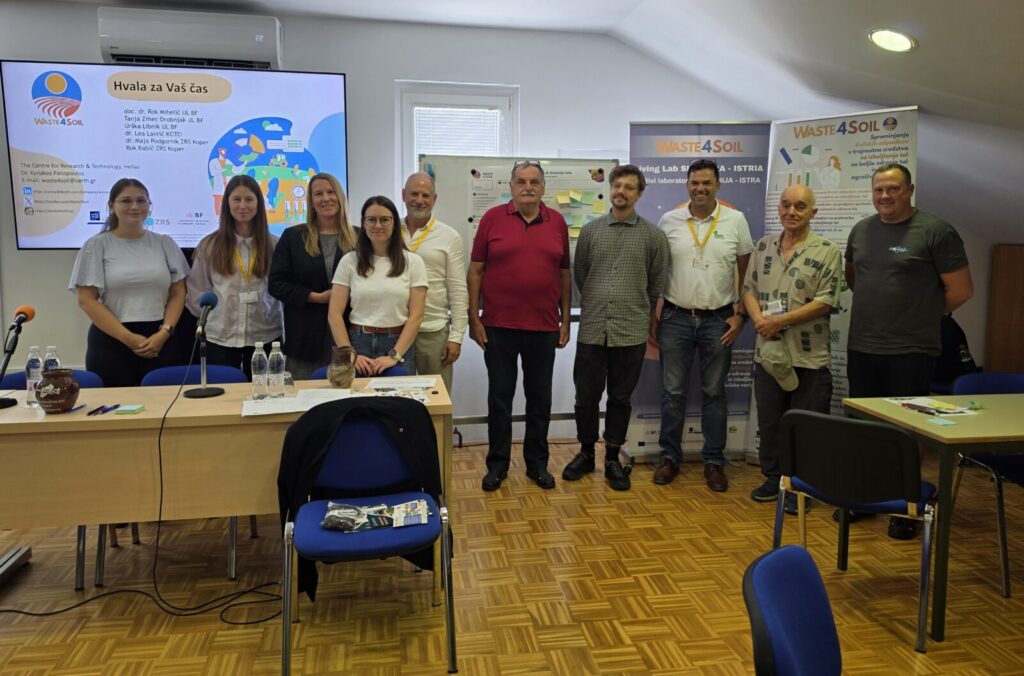
At the 64th International Fair of Agriculture and Food AGRA in Gornja Radgona, a consultation and interactive workshop was held on 26 August 2026 as part of the European Waste4Soil project. The event was jointly organised by the Biotechnical Faculty of the University of Ljubljana, KOTO d.o.o. and the Science and Research Centre Koper. The central question was whether the EU action plan on fertilisers can reduce barriers to the circulation of locally sourced nutrients and strengthen strategic autonomy in domestically produced fertilisers.
The practical results of the Slovenian Living Lab were presented, including the DIGOL soil improver, developed from digestate, olive pomace and biochar. Trials on potatoes, cabbage, lettuce and tomatoes showed nitrogen, phosphorus and potassium uptake comparable to mineral fertilisation, as well as approximately 80% agronomic nitrogen efficiency; the product reached Technology Readiness Level TRL 6.
During the group discussions, participants from research, industry and agricultural practice stressed that technological feasibility alone is not enough. Key barriers remain the unclear regulatory status of circular products, the transition from waste status to product status, demanding certification procedures and the transfer of research results into practical recommendations for farmers. The workshop findings will provide a basis for the further work of the Slovenian Living Lab and the Waste4Soil project.