en
en Slovenščina
 Italiano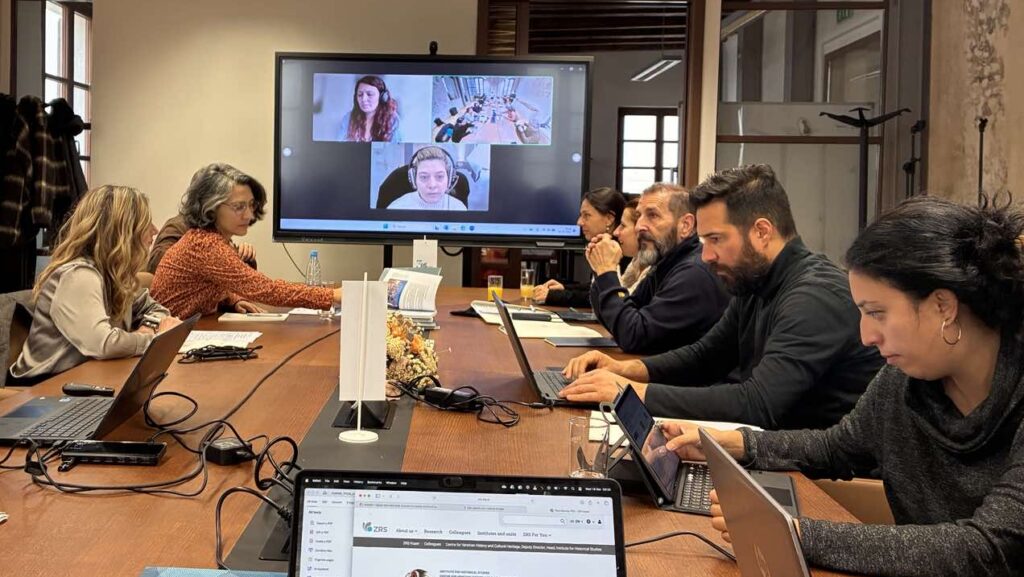
On Tuesday and Wednesday, March 17 and 18, the final transnational meeting of partners in the HUMAN project – Digital Hate Interrupter Activism to Combat Structural Racism, Promoting Inter-Community Cooperation through Digital Technologies – took place in Koper, hosted by the Science and Research Centre (ZRS) Koper. The project’s activities are aimed at preventing hate speech directed at diasporas in partner countries.
The two-day event brought together partners from Greece, Spain, Portugal, Cyprus, Italy, Sweden, Belgium, and Slovenia, who jointly reviewed the project’s key achievements, evaluated its results, and outlined directions for future work beyond the project’s official conclusion.
A special focus of the meeting was on presenting and improving the project’s core outputs. Among them, the Digital Hate Interrupter Activism online learning platform stands out, enabling young people to acquire knowledge and tools for identifying and preventing hate speech online. Partners discussed opportunities to further develop the platform to ensure its long-term accessibility, effectiveness, and adaptability to different national contexts.
An important part of the program was also the presentation of a transnational report on digital activism for preventing hate speech, offering comparative insights from participating countries. The report’s findings confirm the growing role of young people in shaping digital spaces based on respect and inclusion. In addition, partners presented the HUMAN podcast series, which has reached a wide audience across Europe.
Through the collaboration of a diverse international consortium, the HUMAN project successfully connected research, education, and activism, contributing to the empowerment of young people to actively confront hate speech. At the conclusion of the meeting, participants agreed that the project provides a strong foundation for future initiatives in this field. Due to the high level of interest and youth engagement, there is a clear need to continue activities that promote the development of inclusive and safe digital communities.
The views and opinions expressed in this article are those of the authors and do not necessarily reflect the views of the European Union or the European Commission. Neither the European Union nor the European Commission can be held responsible for the content.