 en
en Slovenščina
 Italiano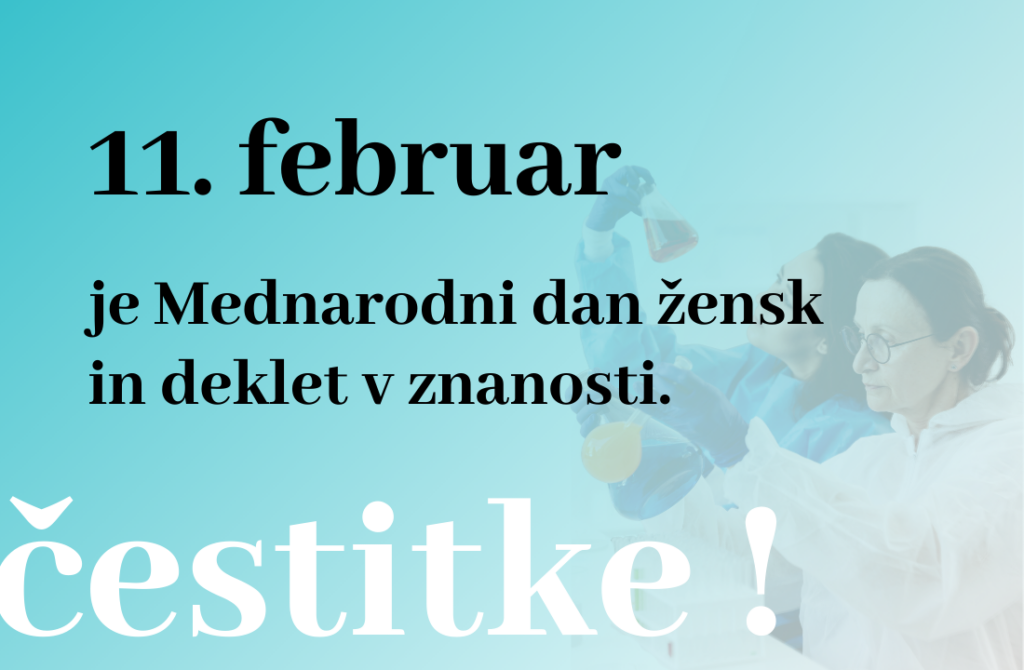
On 22 December 2015, the United Nations General Assembly proclaimed 11 February as the International Day of Women and Girls in Science.
The purpose of the International Day of Women and Girls in Science, now being celebrated for the tenth consecutive year, is to raise awareness about gender equality and to empower women and girls who study or work in science — particularly in the fields of technology, engineering and mathematics. The key message is clear: more women in science means better science. Diversity within research communities brings new perspectives, inspires better questions, and leads to higher-quality solutions that benefit society as a whole.
According to data from the Statistical Office of the Republic of Slovenia for 2025, more than 6,700 women in Slovenia hold doctoral degrees. Women accounted for 53% of those who obtained a doctorate in 2024. This is symbolically significant, as a doctorate represents a key entry point into an academic career.
Among researchers employed in research and development in Slovenia, women account for 37%, slightly above the EU average of 35.5%. At ZRS Koper, 52 female researchers and 54 male researchers are employed, meaning that women represent 49% of the research workforce. Among researchers holding a doctorate, 32 are women, accounting for approximately 42% of all doctoral-level researchers at the institution.
Dr Saša Pišot, Senior Research Associate at the Institute for Kinesiology Research at ZRS Koper and member of the Commission for Equal Opportunities in Science operating under the Ministry of Higher Education, Science and Innovation (MVZI), stated:
“Although women in Slovenia today represent a slight majority among doctoral graduates, and their share among associate and full professors has increased noticeably over the past decade, inequalities persist. On average, women are still paid less, are less likely to participate in international research mobility, and are more likely to encounter structural barriers related to caregiving responsibilities and institutional practices. The so-called ‘leaky pipeline effect’ is gradually diminishing, but it has by no means been eliminated.
Systemic measures—such as gender equality plans, fairer conditions for research mobility, and the consistent elimination of stereotypes and bias — are therefore of key importance. At ZRS, since 2021, following the establishment of the Commission for Equal Opportunities, we have been implementing annual activities and training under the Gender Equality Plan aimed at ensuring equal opportunities for all employees. It is important to emphasise that these activities are not only about fairness; they also strengthen the quality of science itself. More equitable working environments are more effective, lead to better decisions, and foster stronger professional relationships.
All of us can contribute to change by opening science to talent regardless of gender and by creating better conditions that encourage more women to work in laboratories, research groups, and in leading and managerial positions.”
As part of the ongoing initiatives of the Commission for Equal Opportunities at the Ministry of Higher Education, Science and Innovation, Dr Saša Pišot will moderate a discussion on the state of equal opportunities in scientific career development on 19 March 2026 at the Koper Theatre. The event is part of the SPOZNAJ (Relaxed Conversations on Science) series, organised by ZRS Koper in cooperation with the Koper Theatre.