 en
 Slovenščina
 Italiano
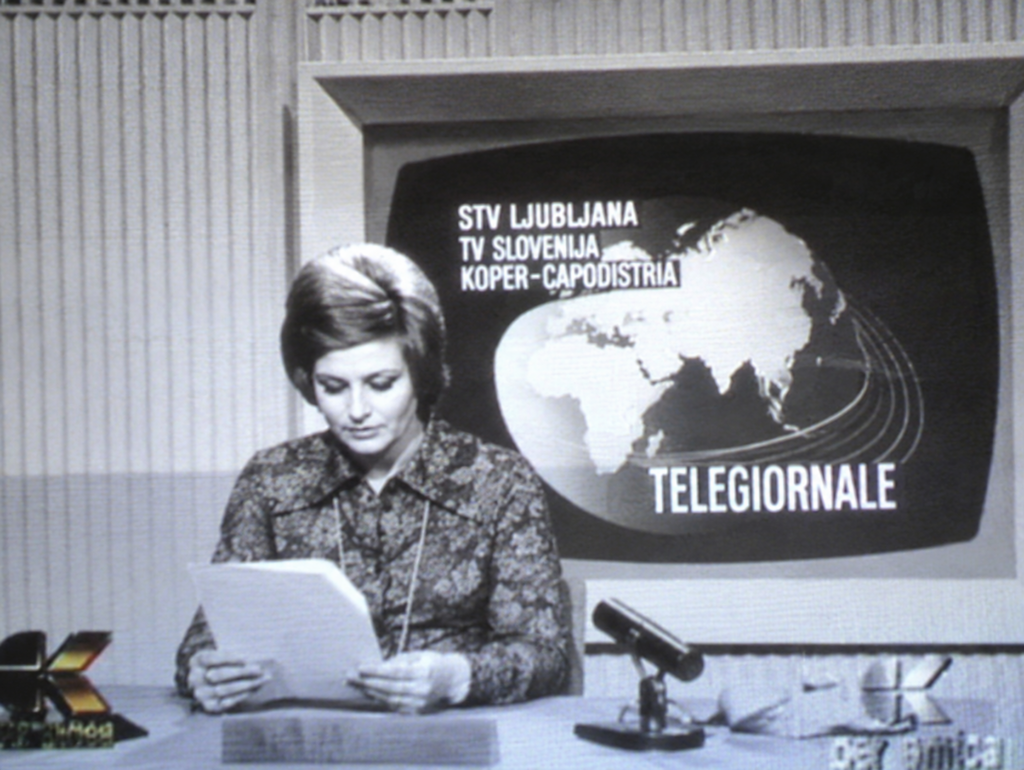
TV Koper–Capodistria was much more than a regional television station. During the Cold War, it became one of the most prominent media crossroads between socialist Yugoslavia and Western Europe, while its signal, programming and technological innovations extended far beyond the original purpose for which it had been established. This remarkable story is the subject of an exhibition opening today at the ZRS Koper Centre for the Humanities.
The exhibition forms part of the European project TransborderTV (Television Beyond Cold War Blocs: The Role of TV Koper–Capodistria in Overcoming Border Divisions in the Northern Adriatic), coordinated by ZRS Koper. The project aims to systematically reconstruct the history of TV Koper–Capodistria and examine its wider social significance.
The television station, which began broadcasting in 1971, was established primarily to meet the cultural and information needs of the Italian national community in Yugoslavia. Its influence, however, soon extended far beyond Slovenian Istria and the Yugoslav–Italian border.
One of TV Koper–Capodistria’s principal distinguishing features was its colour broadcasting at a time when the Italian public broadcaster RAI was still transmitting in black and white. Its news programming was another important aspect of its influence, frequently offering Italian viewers a different perspective on major international events.
From the 1970s to Slovenian Independence
The central objective of the TransborderTV project is to reconstruct the operation of the television station from its beginnings in the 1970s, through its transformations in the 1980s, to the period of Slovenia’s independence. The research draws on archival sources and interviews with people involved in the station’s operation. It also examines lobbying and diplomatic activities, the role of minorities and the responses of Italian audiences.
The 1980s are particularly interesting, as numerous local Italian television stations broadcast TV Koper–Capodistria programmes under an agreement with the Teleconsorzio network. The network was associated with private television stations sympathetic to the Italian Communist Party. As a result, TV Koper–Capodistria reached audiences across a considerably wider area of Italy.
In Silvio Berlusconi’s Orbit
In 1987, TV Koper–Capodistria also entered the orbit of Silvio Berlusconi’s Italian media empire. Berlusconi primarily saw the Koper-based station as a means of acquiring sports content through the Eurovision network, to which TV Koper–Capodistria had access as part of the Yugoslav public broadcasting system. It could also provide live broadcasts, which private Italian television stations were not permitted to air at the time.
The tensions caused by this position within the Italian media landscape are well illustrated by a widely known incident from 1989. Following the broadcast of the Wimbledon tennis tournament—whose rights traditionally belonged to Eurovision but had been purchased for Italy by Berlusconi that year—RAI demanded and secured the exclusion of TV Koper–Capodistria from the Eurovision network. The case demonstrates that the Koper television station was not merely a peripheral cross-border media phenomenon, but an actor capable of influencing the balance of power in the Italian television market.
Much More Than a Television Station
The exhibition TV Koper–Capodistria: The Yugoslav Television Station That Modernised Italy—Colour Broadcasting, the Television Industry and Social Change tells the story of the television station through archival material, newspaper articles, advertisements and other visual records of its influence. It also demonstrates how a television station situated at the intersection of two countries and different political systems could become a space for technological innovation, cultural mediation and cross-border cooperation.
Dr Federico Tenca Montini
The TransborderTV project (Television Beyond Cold War Blocks: The Role of TV Koper–Capodistria in Overcoming Upper Adriatic Border Divisions) is funded by the European Union under the European Research Council funding scheme for established researchers, HORIZON-WIDERA-2023-TALENTS-02, Grant Agreement No. 101180568.
The views and opinions expressed are solely those of the author or authors and do not necessarily reflect those of the European Union or the European Research Executive Agency (REA). Neither the European Union nor the granting authority can be held responsible for them.
