 en
 Slovenščina
 Italiano
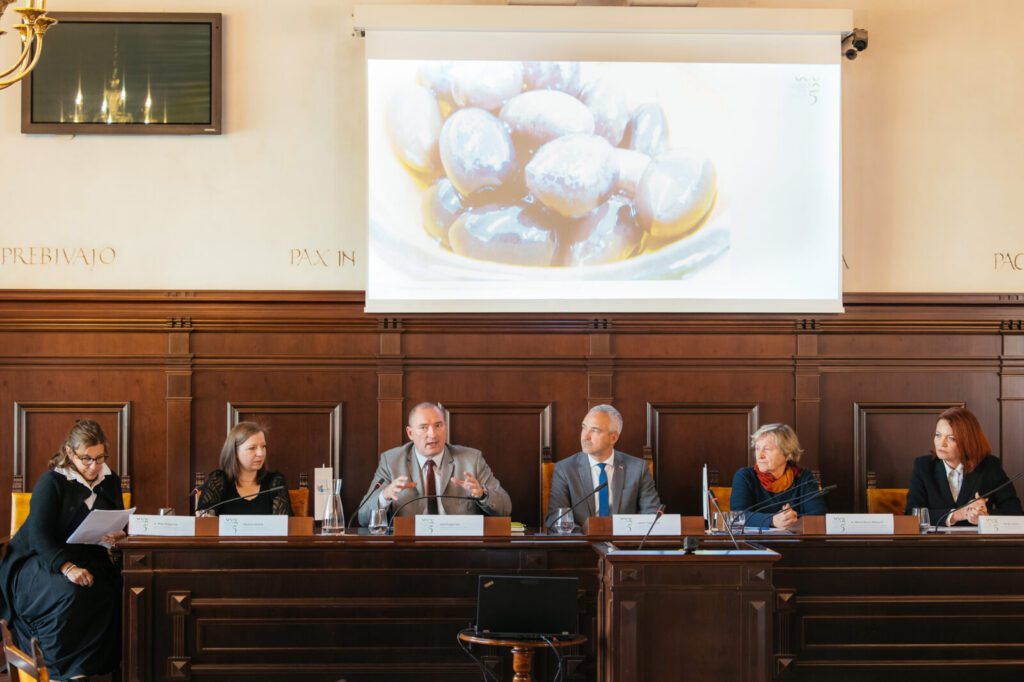
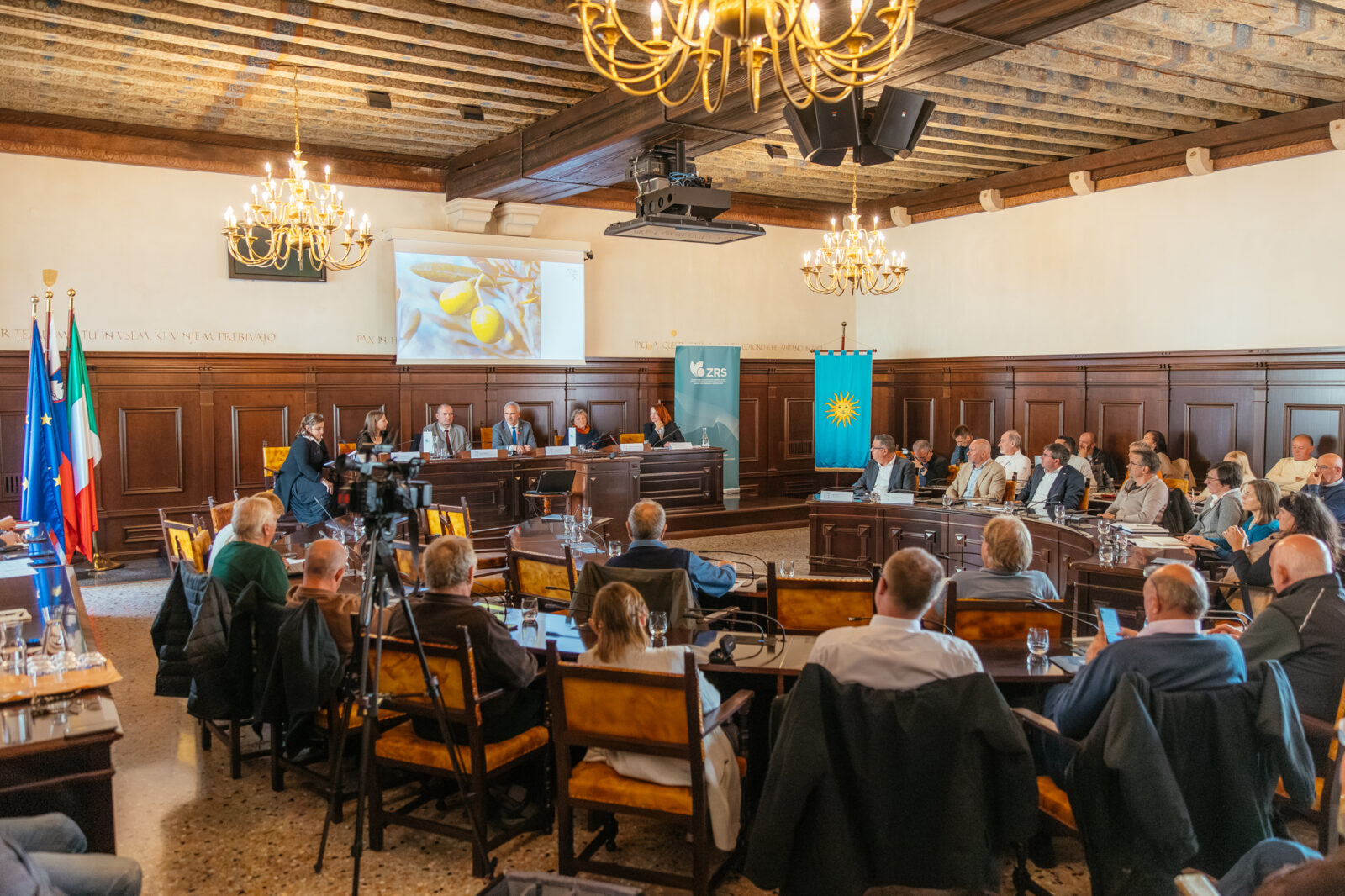
What are the development prospects for Slovenian olive growing? How can the specific characteristics of this sector be incorporated into agricultural policy? What challenges does a young farmer taking over a farm face, and what can we learn from the Croatian and international experiences of olive-growing experts? These were some of the questions discussed at a roundtable on the development of Slovenian olive growing, organised by the Institute for Oliveculture of the Science and Research Centre Koper (ZRS Koper) at the Praetorian Palace in Koper as part of the Mlado oljčno olje (Young Olive Oil) event, which also marks World Olive Tree Day (26 November).
“For more than a decade, these meetings have brought us back to the question of what conditions Slovenian olive growing needs to thrive. The Institute, the municipality and olive growers have repeatedly pointed out that the small size and fragmentation of our olive groves, the specific characteristics of production and increasingly severe climate risks require carefully considered solutions tailored to our circumstances. Knowledge continues to advance, experience is accumulating, and proposals are on the table. Yet when it comes to establishing a comprehensive regulatory framework, it too often seems that the seeds of these discussions fall on barren ground,” emphasised Dr Maja Podgornik, Head of the Institute for Oliveculture at ZRS Koper, who moderated the discussion.
The roundtable brought together Janez Cigler Kralj, Minister of Agriculture, Jože Podgoršek, President of the Chamber of Agriculture and Forestry of Slovenia, Martina Veršnik, a young farmer who has taken over the Olea d’Istria farm, Sonja Jelača, business consultant at Monterosso, and Dr Milena Bučar Miklavčič, an international expert affiliated with the International Olive Council and the Institute for Oliveculture at ZRS Koper.
The participants were welcomed by Prof. Dr Rado Pišot, Director of ZRS Koper, and Aleš Bržan, Mayor of the Municipality of Koper (MOK). The meeting focused on the importance of cooperation between research institutions, the local community and the government in creating a more supportive environment for Slovenian olive growers. An important step in this direction is the establishment of the Competence Centre for Olive Growing and Other Mediterranean Crops in Plavje, developed with the support of the Municipality of Koper and the then Ministry of Higher Education, Science and Innovation.
“Although Slovenian olive growing is relatively small in scale, it is extremely important for our region, landscape, identity and future. With the new Competence Centre for Olive Growing and Other Mediterranean Crops, we have taken a significant step forward. We must now ensure that this infrastructure can serve science, the profession and, above all, olive growers in the long term,” emphasised Prof. Dr Rado Pišot, Director of ZRS Koper.
“Olive growers rightly expect concrete measures to protect their work, the quality of their produce and the added value they create. One important step in this direction is the adoption of an Olive Growing Act. I hope that we will finally move beyond proposals and discussions towards concrete action,” said Aleš Bržan, Mayor of the Municipality of Koper.
Small Olive Groves Do Not Mean Olive Growing Is of Minor Importance
Slovenian olive growing is characterised by small, fragmented and often terraced olive groves, which limit opportunities for mechanisation and intensification of production, particularly compared with the intensive and super-intensive systems expanding in some of the larger Mediterranean olive-producing countries.
This structure calls for a different approach to designing support measures. Small olive groves are important not only for olive oil production but also for preserving the cultural landscape, biodiversity, traditional terraces and local identity.
One of the key points of the discussion was therefore the need to distinguish between production for personal consumption and commercial production, and to develop measures accessible to both groups. Particular attention was also given to young farmers taking over farms, who face high costs, administrative obstacles and complex procedures when applying for financial support.
From Obstacles to Cooperation
A significant part of the discussion focused on access to financial support, improving production records and adapting olive growing to climate change. It was emphasised that, without a clear understanding of the actual situation, it is difficult to plan the sector’s development. Meanwhile, smaller olive growers often fail to benefit from available support because of demanding eligibility requirements and complicated procedures. Key proposals therefore included simplifying procedures, reducing bureaucracy and adapting support measures to smaller producers.
One of the central questions raised at the meeting was how to better connect scientific research, public agricultural advisory services, laboratories, experimental plantations and agricultural consultancy, following the example of the hop-growing sector. The need for greater coordination and a single point of contact was highlighted, enabling olive growers to access information, expert assistance and innovative solutions more easily. The new research infrastructure provided by the Competence Centre for Olive Growing and Other Mediterranean Crops in Plavje further strengthens opportunities for transferring scientific knowledge into practice, while ensuring stable, long-term funding remains a key challenge.
Janez Cigler Kralj, Minister of Agriculture, commented: “I see Slovenian olive growing as one of the most promising agricultural sectors, which, despite numerous challenges, continues to demonstrate growth and development potential. Its future lies not in large production volumes but in outstanding quality, for which Slovenian olive oil is recognised both at home and abroad. Our task is to work together with olive growers, experts and professional organisations to find solutions to the sector’s greatest challenges, ranging from land fragmentation and access to agricultural land to irrigation and the reduction of administrative burdens. We must pay particular attention to young farmers taking over farms, as without them there is no future for Slovenian olive growing. I am convinced that through more targeted measures, investment in water infrastructure and support for high-quality domestic production, we can strengthen the sector’s competitiveness and preserve the important role of olive growing in the development of Slovenia’s rural areas and cultural landscape.”
Afternoon Programme Included the Evaluation of the Best New-Season Olive Oils
The afternoon programme continued at 4:00 p.m. at the KeBon gastronomic laboratory at Vinakoper, where a sensory evaluation of new-season olive oils by representatives of the hospitality industry, the media and the public took place. Participants evaluated oils from the most successful producers and selected the best new-season olive oil.
The event also featured a brief presentation of international trends in olive oil quality and authenticity.
The evaluation is an important part of the Mlado oljčno olje (Young Olive Oil) event, which promotes the recognition of premium Slovenian olive oils and strengthens the role of the hospitality industry, the media and the wider public in promoting their quality. The event was organised through cooperation between ZRS Koper, the Koper Institute for Youth, Culture and Tourism (ZMKT Koper) and the Municipality of Koper.
The winning new-season olive oil will be announced on 26 November 2026 at the main ceremony of the Mlado oljčno olje Festival, held at the Libertas Cultural Hub in Koper.