 en
en Slovenščina
 Italiano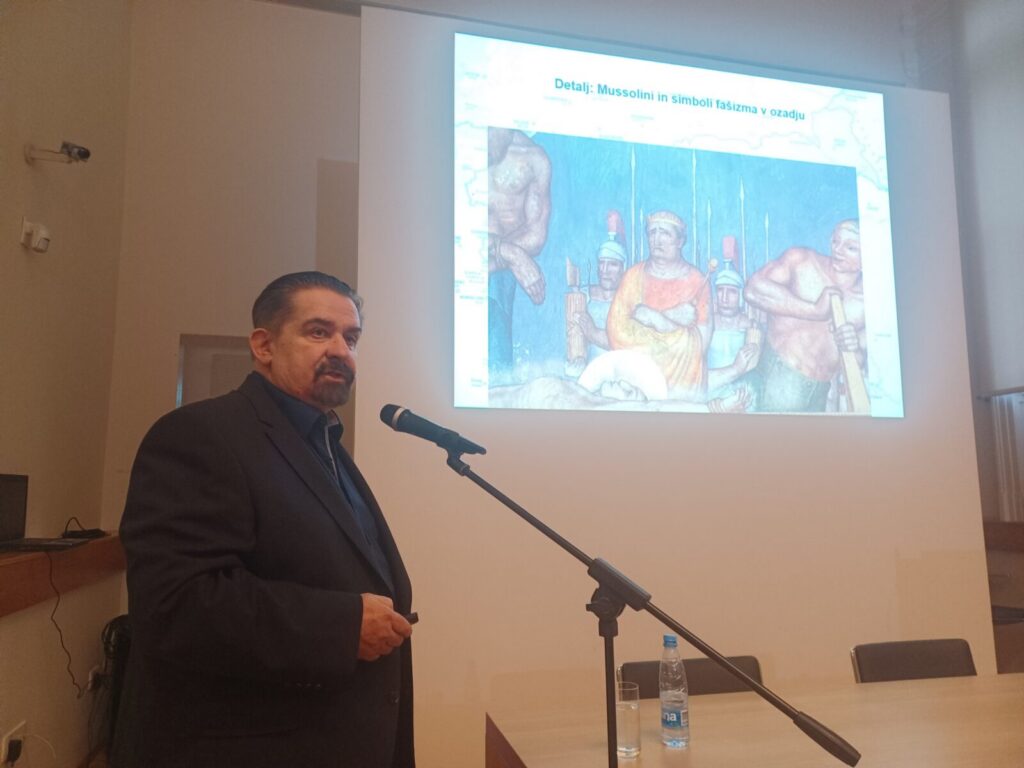
Egon Pelikan, PhD, Scientific Councillor at the Institute for Historical Studies and President of the Scientific Council of ZRS Koper, delivered a well-received lecture entitled Tone Kralj and the Border Space at the National Gallery (Narodna galerija) in Ljubljana on Thursday, 17 September.
He presented the work of painter Tone Kralj in the Primorska region, where the largest part of his oeuvre was created during the Fascist period. This includes the decoration of more than forty churches in the territories beyond the Rapallo border. Pelikan, who has also published a monograph on Tone Kralj, explained on the basis of his research how the artist incorporated concealed anti-Fascist and nationally defensive messages into sacred art, as well as the role his paintings played during the violent denationalisation of the Slovenian population.
The lecture shed light on the symbolism of selected works, Kralj’s cooperation with the clergy of the Slovenian Littoral, and the significance of his art as an outstanding example of cultural resistance in a border region.
The exhibition Tone Kralj (1900–1975) – Visionary Mystic is currently on view at the National Gallery and, due to strong public interest, will remain open until 4 October 2026. According to project leader Bernarda Stenovec, Pelikan’s lecture was an important addition to the exhibition, helping to bring the significance of Tone Kralj and his art closer to audiences in central Slovenia.