 en
en Slovenščina
 Italiano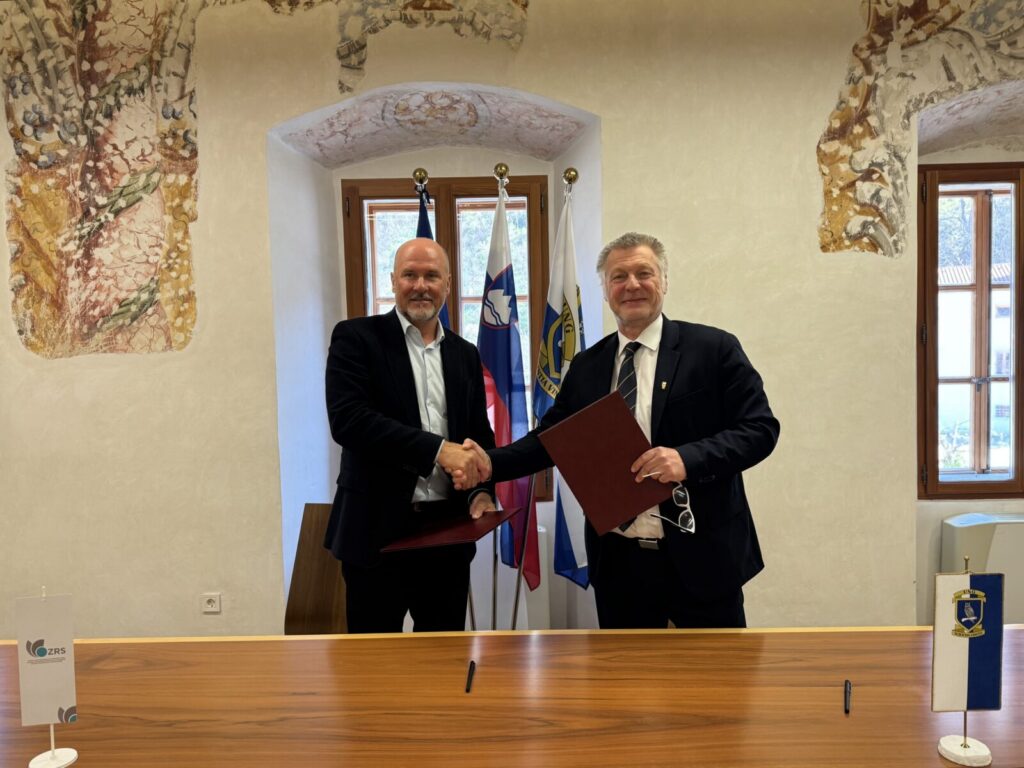
At the University of Nova Gorica today, Rector Prof. Dr Boštjan Golob and Director of the Science and Research Centre Koper, Prof. Dr Rado Pišot, signed an agreement on long-term cooperation in the fields of education and scientific research. The agreement represents an important step toward even closer collaboration between the two institutions and the further development of their already successful partnership.
The partnership will focus on the development of joint research activities, the enhancement of study programmes, and the strengthening of the educational process, as well as joint participation in national and international projects. Particular emphasis will be placed on areas where the expertise and knowledge of both institutions complement one another, including linguistics and other humanities disciplines, environmental and historical sciences, as well as research in viticulture, winemaking, and olive growing.
Prof. Dr Rado Pišot emphasized that the agreement confirms the long-standing successful cooperation between the two institutions and represents a commitment to its continued strengthening. He expressed confidence that they would continue to successfully develop joint projects and further enhance cooperation in both research and education, especially within postgraduate and doctoral programmes. On this occasion, he also congratulated the University of Nova Gorica on its 30th anniversary and wished the institution continued success in the future.
At the signing ceremony, Prof. Dr Boštjan Golob highlighted the importance of connecting Slovenian research and higher education institutions in order to achieve greater international recognition and excellence. He added that cooperation with the Science and Research Centre Koper strengthens both institutions, while the signed agreement opens new opportunities for even more systematic and in-depth collaboration.
Over more than 30 years of operation, both institutions have not only justified their existence but have also established a visible presence in niche scientific research and academic fields. Through their joint cooperation, these achievements will be further strengthened and expanded.