 en
en Slovenščina
 Italiano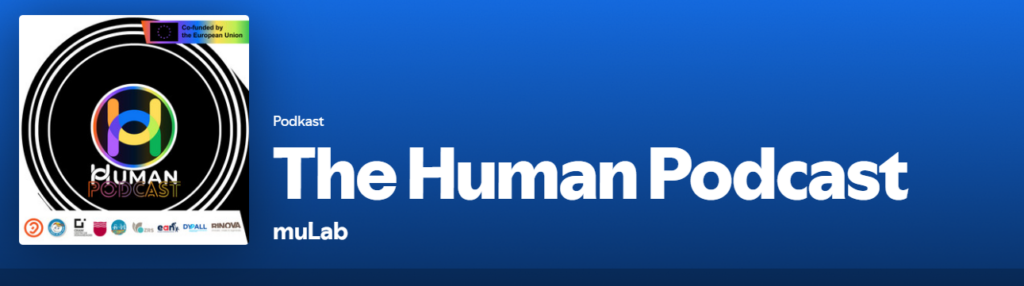
New episodes of the HUMAN podcast show how young people across Europe are using online tools to combat hate speech and promote inclusive online communities. The podcasts are part of the project’s educational activities, with the goal of empowering young people and local communities to combat hate speech against minorities.
The episodes explore how online activism can help young people confront hateful content—both online and offline—and drive social change. The episodes interweave real-life experiences, strategies, and practical examples that demonstrate how social media and online platforms can foster constructive dialogue in society.
The podcast features 45 episodes created by young people from Sweden, Spain, Slovenia, Cyprus, Portugal, and Italy, exploring social media through civic engagement, community participation, digital literacy, and youth involvement in democratic processes. Each episode features guests with diverse backgrounds, ranging from political and legal experts, law enforcement officials, representatives of non-governmental organizations, social workers, educators, and researchers, youth activists, to individuals with personal experience of hate speech and discrimination. A key feature of the episodes is the inclusion of voices from minority groups, who frequently face online hate speech and exclusion but are rarely included in public discussions. The podcasts were produced by young people involved in the HUMAN project (Digital Hate Interrupter Activism to Combat Structural Racism, Promoting Inter-Community Cooperation through Digital Technologies, project no. 101144478).
The episodes are available here: https://open.spotify.com/show/1XJoIFGpEF1hqqmWnAA1Tb
The views and opinions expressed in this article are solely those of the authors and do not necessarily reflect the views of the European Union or the European Commission. Neither the European Union nor the European Commission can be held responsible for the content.