en
en Slovenščina
 Italiano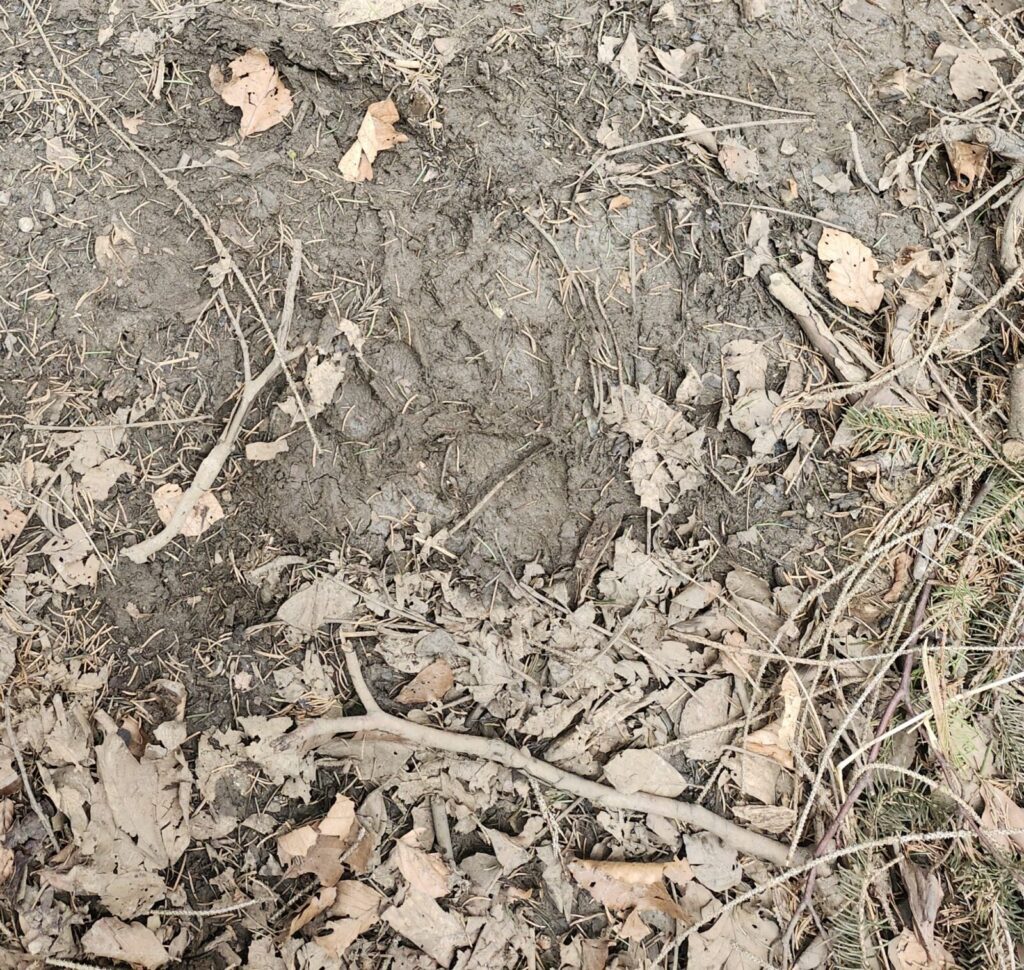
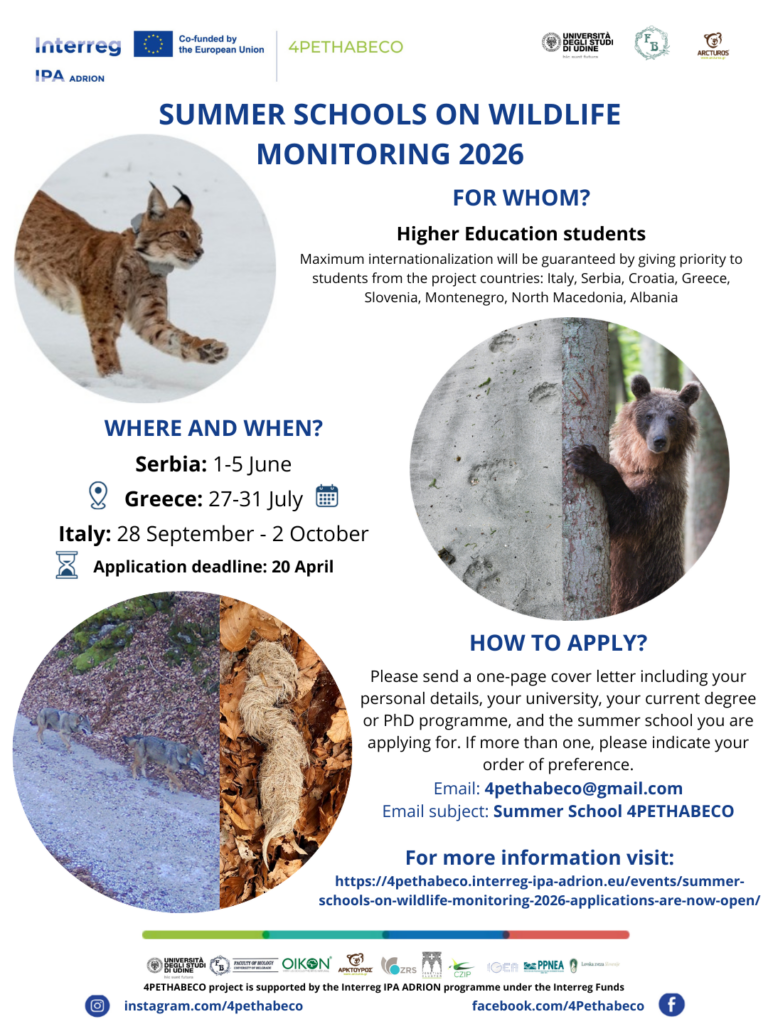
As part of the 4PETHABECO project, applications have been opened for international summer schools on monitoring large carnivores for students of higher education programs. Priority will be given to university students from countries involved in the project: Italy, Serbia, Croatia, Greece, Slovenia, Montenegro, North Macedonia, and Albania. The application deadline is open until April 20, 2026.
The first summer school will take place in Tara National Park in Serbia from June 1 to 5 and will focus on monitoring large carnivores, particularly brown bears. The program combines theoretical lectures, fieldwork, data collection, and introductory analytical methods.
The second summer school will be held from July 27 to 31 in northern Greece and will combine theoretical training, field activities, and visits to wildlife centers of the ARCTUROS organization. The focus will be on monitoring large carnivores and strategies for improving human–wildlife coexistence. The program will take place in the Vitsi mountain range, in the field (in the mountains and around lakes), and at the organization’s headquarters and wildlife centers.
The third summer school will take place from September 28 to October 2 in the Julian Prealps Natural Park in northern Italy, near the Slovenian–Italian border, and will offer training in monitoring large and medium-sized carnivores. The program combines theoretical lectures and field activities in the park’s natural areas, introducing participants to innovative monitoring methods and participatory approaches to human–wildlife coexistence.
Participation in all summer schools is free of charge, and accommodation and meals are also covered. More information about the program and implementation of the summer schools is available in English on the 4PETHABECO project website, where the application process is explained in detail. Applicants are also required to submit a motivation letter in English.
Photo: Tracks (source: Bernarda Bele)
The 4PETHABECO project is supported by the Interreg IPA ADRION programme, within the framework of Interreg funds (European Regional Development Fund and IPA).